You Can Be Strong
And Still Feel Lost In Your Body.
Somatic training isn't a softer alternative to real training. It's the layer most people skip entirely — and the reason strength, mobility, and discipline sometimes fail to add up to anything that actually feels like ownership.
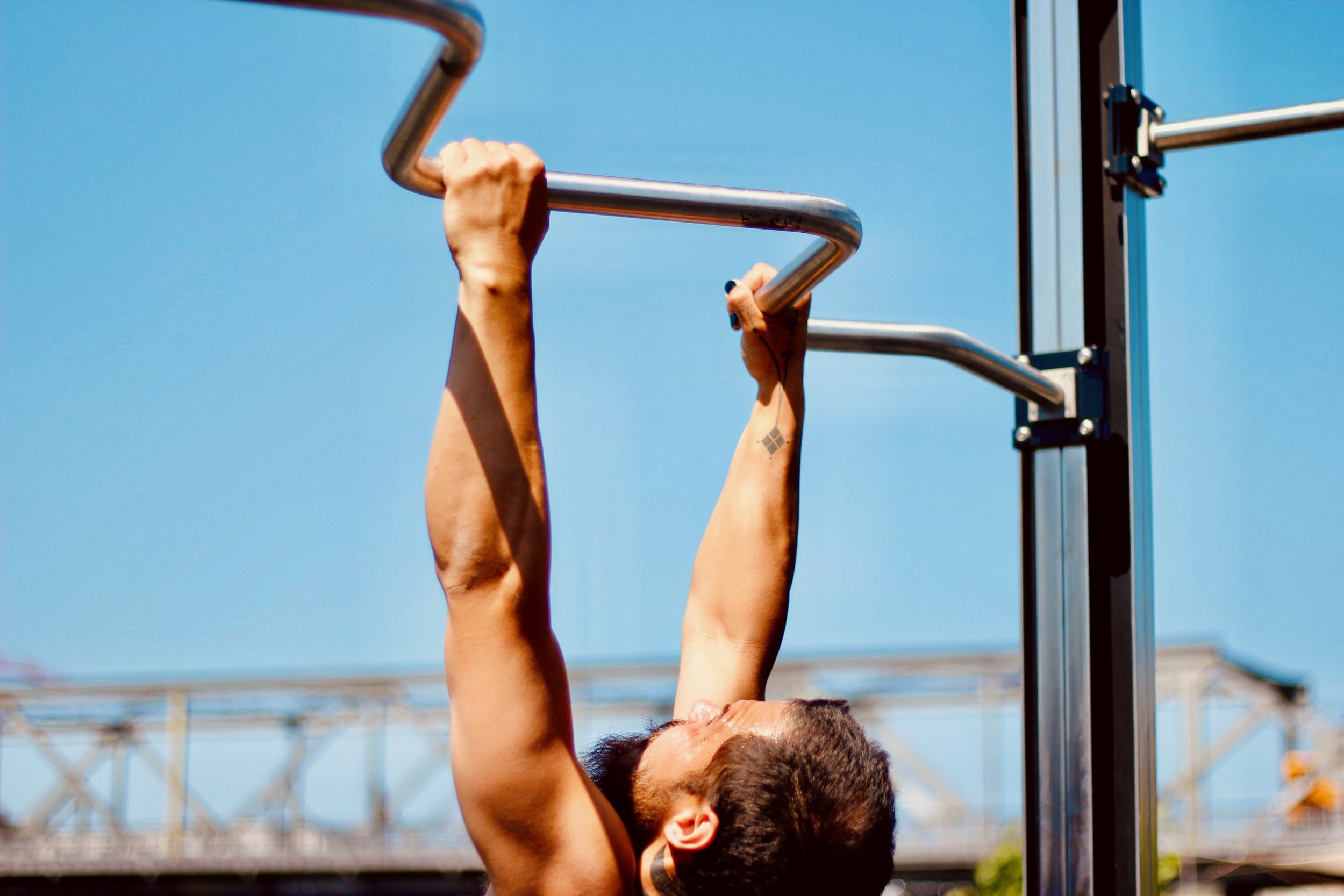
Take a breath right now — a real one. Notice where it goes. Notice where it stops. Notice if you held it while reading that sentence. That gap between what your body does and what you notice it doing: that's the territory this article is about.
There's a particular kind of person this is written for. They train. They're consistent, maybe even disciplined. They've put in years. And yet something still feels off — not injured exactly, not broken, but somehow not quite theirs.
They move well enough by most external measures. But inside the movement, there's a disconnect. A sense of pushing through rather than moving from. Of performing the body rather than inhabiting it.
That gap has a name. And it's not a lack of strength.
The Problem Nobody Sees.
Most people train on top of their body. They apply effort to it, load it, programme it, push it through ranges — but they relate to it the way a driver relates to a car. Input goes in, output comes out, and what happens in between is largely invisible.
This works, up to a point. You can build considerable strength and capability this way. But it leaves a layer untouched — the layer where the body actually lives. Where sensation happens. Where compensation develops quietly over years. Where the difference between a movement that's controlled and one that's merely completed lives.
The signs tend to look like this:
- Pushing through reps without any sense of what's actually working.
- Stretching daily but never feeling like the range becomes yours.
- Copying movements precisely — and still feeling nothing like the person demonstrating them.
- Training harder to fix things that don't respond to harder.
- A vague sense that the body is something you manage, not something you are.
None of these are character flaws. They're what happens when effort gets applied without a corresponding development of inner attention.
You can train consistently for years and still be a stranger to your own body. Effort is not the same as presence.
What "Somatic" Actually Means.
The word gets used in ways that make it sound either mystical or marginal. It's neither.
Somatic simply means: working with the body as it is experienced from the inside.
Not from the outside — not how a movement looks, or what it produces, or how it compares to a standard. From the inside: what it feels like, what sensation is present, what the body is actually reporting in real time. It means treating internal feedback — not just external performance — as data worth attending to.
In practice, this translates to:
- Sensation — what you feel during movement, not just what you achieve.
- Perception — noticing the difference between sides, between states, between today and yesterday.
- Internal feedback — using what the body tells you to adjust, not just what the mirror or the numbers say.
- Relationship with quality — caring about how a movement is organised, not just whether it was completed.
This is not about slowing everything down forever, or abandoning load, or making training gentle. It's about developing a more honest relationship with what's actually happening inside the work.
Somatic vs. Embodiment — They're Not The Same Thing.
The distinction that matters
Somatic is the method — the practice of attending to inner sensation and experience during movement. Embodiment is the outcome — what happens when your actions, your attention, and your body begin to align. Somatic work is how you get there. Embodiment is where you arrive.
Most people experience embodiment in brief moments — a movement that felt completely owned, a day when the body felt cooperative and alive, a session where everything came together without force. The question isn't whether you've felt it. It's whether you can reliably return to it.
That reliability is built through somatic practice. Not through one transformative session, but through accumulated attention — training the body to be present in itself, consistently, over time.
Why Strength Alone Isn't Enough.
This is worth saying plainly, because it's the idea most people resist: you can be strong inside a pattern that doesn't work.
Strength can exist inside compensation. Mobility can exist without real control. Discipline can exist without awareness. All three can co-exist for years — and they often do — while the underlying pattern stays completely intact, getting stronger and more entrenched with every rep.
This is why people with tight hips keep stretching without resolution. Why trained shoulders stay irritated. Why high performers feel disconnected from the very bodies they've invested so much in. The input keeps increasing. The pattern keeps holding.
Somatic work doesn't replace strength training. It changes what the strength training is building into . Instead of reinforcing compensation, you start reinforcing integration. The same effort, aimed differently, produces a fundamentally different result.
What Changes When You Train This Way.
The outcomes are harder to photograph than a before-and-after. But they're more durable than most things training produces.
Movements start to feel owned — not performed. The difference between a squat you're forcing and a squat that simply happens from a body that knows how. Less random pain, because compensation patterns start to unwind rather than deepen. More consistency, because the body stops guarding against uncertainty and starts working with you instead. Less overthinking — not because you're thinking less, but because the body is giving clearer signals and you've learned to read them.
And underneath all of it: something that's hard to name but immediately recognisable once you've felt it. A sense that the body is yours — not an object you manage, but the actual place you live from.
Embodiment isn't a feeling you chase. It's a capacity you build — slowly, through accumulated attention, until presence becomes the default rather than the exception.
What It Actually Looks Like In Practice.
Somatic training isn't a separate modality you do instead of your regular work. It's a quality of attention you bring into whatever you're already doing.
In practice, it tends to involve:
- Slowing reps down enough to feel what's actually happening, not just what's completing.
- Attending to transitions — the moments between positions where compensation is easiest to notice and hardest to mask.
- Noticing asymmetry without immediately trying to override it.
- Regularly working below maximum intensity — not because hard is wrong, but because hard makes it nearly impossible to hear anything.
- Adjusting based on what you feel, not just what the programme says.
A moment to try right now
Stand up, or sit up straight if you're already standing. Take three slow breaths, and on each one, notice something different: first, where the breath goes in your body. Second, whether one side of your ribcage moves more than the other. Third, what your shoulders do when you exhale — do they drop, or do they stay held?
None of those things need to be fixed right now. The point is only that you noticed them. That noticing — that capacity to receive information from inside rather than only applying force from outside — is the beginning of somatic work. Everything else builds from there.
What This Is Not.
Because the word "somatic" gets misused, it's worth being direct.
This is not about processing emotions through movement — though that can happen. It's not soft, passive, or an alternative for people who don't want to train hard. It's not anti-strength, anti-load, or anti-performance.
It's precision, not passivity. It demands more presence, more honesty, and more tolerance for ambiguity than most training requires. Many people find it harder than anything they've done physically — not because it's intense, but because it asks you to actually feel what you're doing rather than push through it.
That's a different kind of hard. And for a lot of people, it's the kind that was missing.
Who This Is For.
You've been training but something keeps feeling stuck — recurring tightness, recurring pain, recurring frustration that more effort isn't producing different results.
Or you feel physically capable but somehow disconnected — like the body is performing for you rather than moving with you.
Or you're a high performer who's built a lot of capacity through control, discipline, and consistency — and you're starting to notice that the same qualities that built your strength are also what's keeping you from going further.
All three are the same underlying situation. The body has been trained without being listened to. And it has a lot to say.
You don't need to abandon how you train. But you may need to change how you relate to it — what you're paying attention to, what counts as information, what success actually feels like from the inside.
That shift is what I work on with clients. Not a new programme. A new relationship with the one you already have. If the tight hips won't resolve, if the shoulder keeps guarding, if the body just doesn't feel like it's cooperating — that's where to start.