Your Hips Aren’t Tight.
They Don’t Trust You.
Stretching isn’t the problem. Repetition isn’t the problem. Trust is. Your body has learned to guard a position it doesn’t feel safe in — and no amount of forcing will change that. Here’s what usually needs to happen instead.
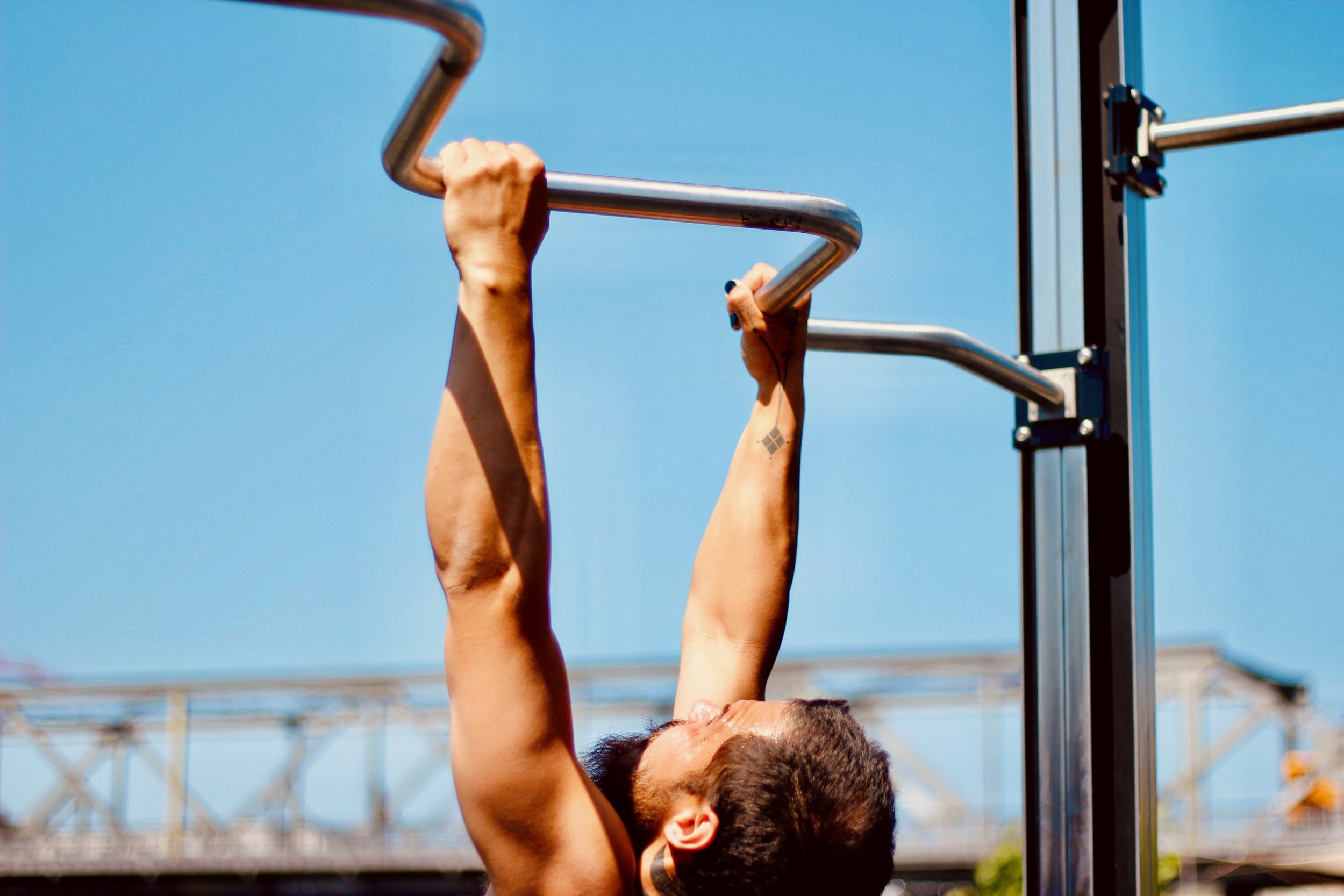
Before you read further — pause for a second. Feel your hips right now, sitting where you are. Notice if there’s holding. Notice if one side feels different from the other. You don’t need to change anything. Just notice. That noticing is where this work begins.
You’ve tried. You’ve stretched. You’ve done the drills, the routines, the YouTube protocols. Maybe you even saw a physio, got some exercises, did them for a few weeks.
And your hips are still tight.
If that’s where you are, I want to say something clearly: the problem probably isn’t that you haven’t tried hard enough. It’s that the thing you’ve been trying to fix isn’t actually the thing that needs fixing.
Tight hips are rarely about length. They’re about trust. And you can’t force a body into trust.
What People Usually Notice First.
Hip tightness rarely shows up as one clean symptom. It tends to arrive as a collection of small frictions — things that feel slightly off, slightly stuck, slightly not-yours:
- Your squat feels blocked at the bottom, even when your legs are strong enough to go deeper.
- One side feels noticeably stiffer than the other, no matter what you do.
- Sitting cross-legged feels awkward, loaded, or strangely unavailable.
- You stretch, feel relief — and then it’s gone within hours.
- Your hips feel decades older than the rest of you.
Sound familiar? Notice if any of those land somewhere in your body right now — not just as recognition, but as sensation. That landing is information.
The distinction that changes everything
Tight does not always mean short . More often it means guarded — a nervous system response, not a structural limitation. Your body isn’t broken. It’s protecting something it doesn’t yet trust you to handle.
Why Stretching Helps — And Then Stops Helping.
Stretching can absolutely change sensation. It can reduce tone, create temporary space, offer a moment of relief. But relief is not the same as resolution.
Here’s what’s happening: your nervous system registers a new range, decides it doesn’t have enough control there, and quietly pulls the tension back up. Not because your body is stubborn. Because it’s doing its job — keeping you in territory it trusts.
That’s why some people spend years “working on their hips” and never feel like those hips actually belong to them. More length without more ownership just teaches the body to guard a bigger range.
What your body cannot control, it protects with tension. That’s not failure. That’s intelligence.
What’s Actually Going On.
For most people, recurring hip tightness is some combination of three things:
1. You live in a narrow range of movement.
Sitting, commuting, training in the same patterns, resting in the same positions — the body learns to keep choosing what it already knows. It doesn’t resist new range out of stubbornness. It just hasn’t had enough reason to rehearse it.
2. You can get into range, but you can’t stay there.
You can push yourself into the position, but the moment you arrive — you feel the grip come back. No steadiness. No ownership. Just arrival and immediate retreat. The body won’t keep what it can’t control.
3. Something else is doing the work.
Your lower back, pelvis, or surrounding musculature may be compensating so heavily that the “hip problem” is really a whole-system pattern. You’re not fixing the hips because the hips aren’t the source — they’re the symptom.
What To Do Instead.
You stop trying to pull the hips open, and you start building a relationship with the range you almost have.
That means slowing down enough to feel what’s happening. Not performing a stretch — inhabiting one.
Try this now
Find your deepest comfortable hip position — a seated figure-four, a low lunge, whatever your body knows. Then back off to about 70% of your range.
- Let your breath slow before you do anything else. Feel your ribs move.
- Begin moving in and out of the position — slowly, a few centimetres at a time.
- Notice the exact moment your control starts to fray. Where does the grip come back? Where does the breath hold?
- Stay there — at the edge of your ownership, not the edge of your range. Get curious about what you feel, rather than trying to push past it.
This won’t feel as dramatic as a hard stretch. You won’t feel that familiar burn. That’s the point. You’re not training intensity — you’re building trust. And trust is quiet.
The Real Project.
Your hips aren’t asking for more range. They’re asking you to show up in the range you already have — with enough steadiness that they don’t need to guard against you anymore.
That’s a different project than stretching. It’s slower, subtler, and it actually works.
This is the work I do with clients — not chasing bigger ranges or harder protocols, but changing the relationship between the person and their body. If you’ve been stuck in the same loop for months or years, that’s where to start.